 EXTRAORDINARY MINISTERS OF HOLY COMMUNION
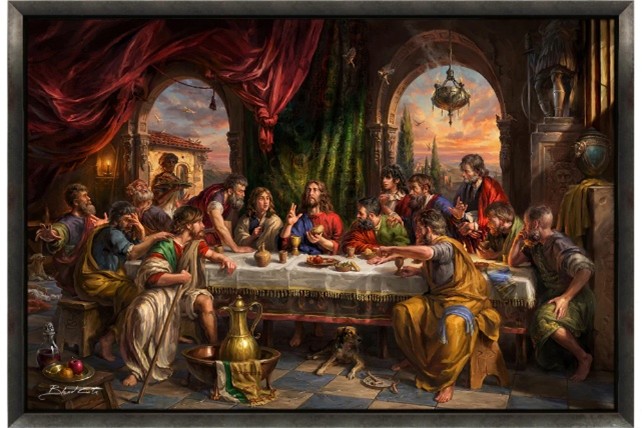
On the night before He suffered and died on the Cross, our Lord Jesus Christ shared a final meal with His disciples. During this sacred meal, He instituted the Sacrament of His Body and Blood, giving the Church the Eucharist as a memorial of His death and resurrection and a way for His saving sacrifice to remain present throughout the ages.
As the Gospel of Matthew tells us:
“While they were eating, Jesus took bread, said the blessing, broke it, and giving it to his disciples said, ‘Take and eat; this is my body.’ Then he took a cup, gave thanks, and gave it to them, saying, ‘Drink from it, all of you, for this is my blood of the covenant, which will be shed on behalf of many for the forgiveness of sins.’” (Matthew 26:26–28)
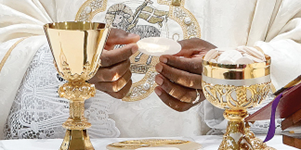
Recalling these words of Jesus, the Catholic Church teaches that during the celebration of the Eucharist, bread and wine become the Body and Blood of Jesus Christ through the power of the Holy Spirit and the ministry of the priest.
 Jesus Himself proclaimed:
“I am the living bread that came down from heaven; whoever eats this bread will live forever; and the bread that I will give is my flesh for the life of the world… For my flesh is true food, and my blood is true drink.” (John 6:51–55)
For this reason, the Church teaches that Christ is truly present—Body, Blood, Soul, and Divinity—under the appearances of bread and wine. This is what we mean when we speak of the Real Presence of Christ in the Eucharist. The risen Lord is present to His Church in many ways, but most especially in the Sacrament of His Body and Blood.
Because of the sacredness of the Eucharist, the Church entrusts its distribution primarily to the ordinary ministers of Holy Communion: Bishops, Priests, and Deacons. However, when needed, trained and commissioned lay persons may assist as Extraordinary Ministers of Holy Communion.
This ministry developed as the Church encouraged the faithful to receive Holy Communion more frequently, especially following the encouragement of Pope Pius X and the pastoral renewal of the Second Vatican Council.
Extraordinary Ministers assist when there are large congregations or when additional help is needed to ensure that Holy Communion is distributed in a reverent and orderly manner. They may also bring Holy Communion to members of the parish who are sick, elderly, or homebound, ensuring that those who cannot attend Mass may still share in the grace of the Eucharist.
Those who serve in this ministry are fully initiated Catholics who have received the Sacraments of Baptism, First Communion/Eucharist and Confirmation. They are individuals who faithfully participate in the life of the Church and who approach this sacred responsibility with humility, reverence, and devotion.
When bringing Holy Communion to the sick and homebound, ministers are called not only to distribute the Eucharist but also to offer comfort, compassion, and prayer. In doing so, they extend the love and presence of Christ to members of our parish family who cannot be physically present at Mass.
The Eucharist is truly the source and summit of the Christian life, nourishing us spiritually and strengthening our unity as the Body of Christ.
Let us continue to approach this great gift with faith, gratitude, and reverence.
Rosemary P. Leon, JP, Coordinator